
The Angolan government has committed itself to the New Urban Agenda in Quito, Ecuador, in October 2016, which will ensure that cities and human settlements are places where all people can enjoy equal rights and opportunities, as well as their fundamental freedoms.
The right to the city includes the social function of land, promoting a secure land tenure, which is economically accessible with basic services, to achieve the realization of the right to adequate housing, with special attention, the security of land tenure for women as key to their empowerment.
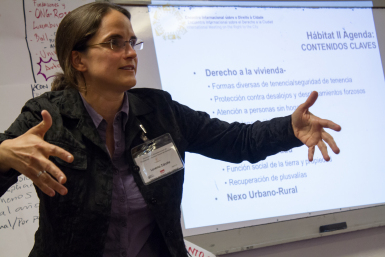
Lorena Zarate – Social Production of Habitat lessons from Latin America
Social production of habitat is an international term used to convey the process and product arising from the experience of people in a community collectively determining the conditions of their own habitat (dwelling place and living environment). Social production is found when people take the initiative to pose solutions to the problems arising from their living conditions. Partners in social production can be informal groups or local organizations, and/or other actors external to the community, such as NGOs, donors, private sector enterprises, cooperatives , professional associations, academics or government institutions, or any combination of these
Media Dossier Alterações Climáticas e Ambiente 2010 2011
O Extracto de notícias é um serviço do Centro de Documentação da DW (CEDOC) situado nas instalações da DW em Luanda. O Centro foi criado em Janeiro de 2001 com o objectivo de facilitar a recolha, armazenamento, acesso e disseminação de informação sobre desenvolvimento socio-economico do País. Através da monitoria dos projectos da DW, estudos,
pesquisas e outras formas de recolha de informação, o Centro armazena uma quantidade considerável de documentos entre relatórios, artigos, mapas e livros. A informação é arquivada física e eletronicamente, e está disponível para consulta para as entidades interessadas.
Além da recolha e armazenamento de informação, o Centro tem a missão da disseminação de informação por vários meios. Um dos produtos principais do Centro é o Extracto de notícias. Este Jornal monitora a imprensa nacional e extrai artigos de interesse para os leitores com
actividades de interesse no âmbito do desenvolvimento do País. O jornal traz artigos categorizados nos seguintes grupos principais.

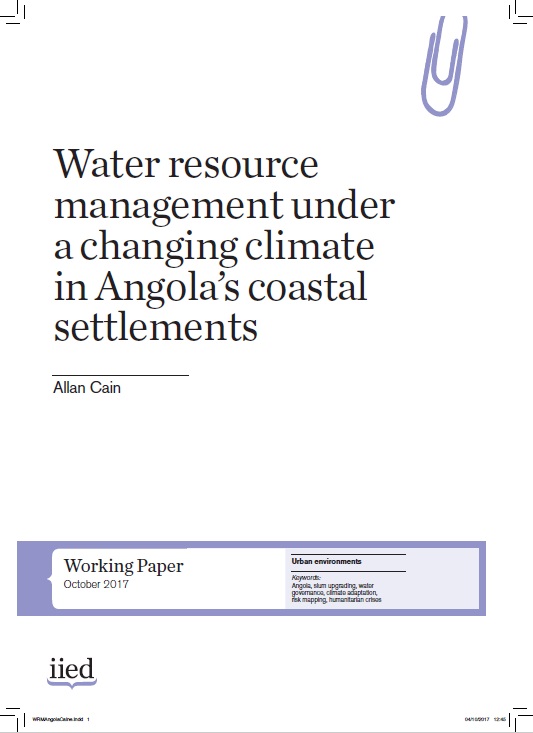
Water Resource Management Under a Changing Climate in Angola’s Coastal Settlements
Angola’s civil war caused a massive population movement from rural conflict areas to low-lying coastal zones between 1975 and 2002. More than half of Angola’s 27 million people now live in urban coastal settlements, floodplains and steep ravines vulnerable to climate extremes. Climaterelated risks are worsening and it is important to understand and prepare for them. Angola’s coastal areas are experiencing increasingly variable rainfall and pressure on water supplies and markets. But a dearth of relevant data has made it difficult to assess these risks. This paper demonstrates innovative methods in filling the information gap and how changes were introduced in how water is governed in four Angolan coastal cities.
O Papel de Recursos Humanos Face a Crise Económica
Celso da Silva, Educador Social, Mestre em Governação e Gestão Pública, Jurista, Técnico Superior de Gestão de Recursos Humanos e Docente Universitário; foi o prelector no espaço do Debate à Sexta feira da Development Workshop Angola do dia 16 de Fevereiro de 2018 onde o tema em análise foi: “O Papel de Recursos Humanos face a Crise Económica: Investimento na Formação de Recursos Humanos em Época de Crise Económica”. Ao longo da sua abordagem, entre as várias questões, procurou reflectir sobre os principais conceitos, políticas e processos, bem como o papel da Gestão de Recursos Humanos na actualidade, também procurou reflectir sobre a utilidade e importância do investimento em recursos humanos face ao contexto de crise económico.